Mr. Ratan Naval Tata – The Visionary, Resolute and Humble Nation Builder
Tata Sons Chairman Emeritus, Mr. Ratan Naval Tata, passed away on 9th October 2024 at the age of 86. Mr. Tata’s demise is an irreconcilable loss to the nation – his 5-decade-career with Tata Group and numerous philanthropic endeavours have not only touched the lives of many, but have contributed a major share towards nation building. Despite belonging to India Inc.’s first family, Mr. Ratan Tata’s life, which was fraught with numerous challenges, continues to provide inspiration to countless people, businessmen or otherwise.
“Thank You for Thinking of Me”
Mr. Tata had a deep sense of gratitude and duty ingrained in his moral fibre. On 7th October 2024 Mr. Tata issued a statement on his social media with the message: “Thank you for thinking of me”. These were the last words to his followers from him, and a couple of days later, Mr. Tata was no more.
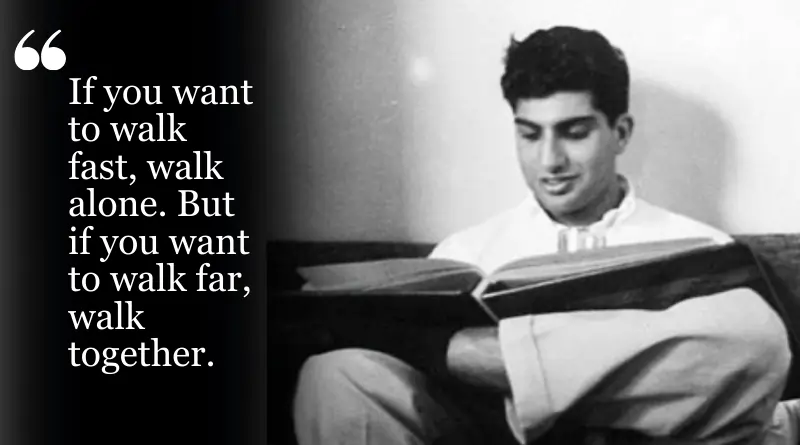
If you want to walk fast, walk alone. But if you want to walk far, walk together
A Brief Recap of Mr. Ratan Tata’s Life
Early Life
Mr. Ratan Tata was born to Mr. Naval Hormusji Tata and Mrs. Soonoo aka Suzanne Tata on 28th December 1937. Mr. Ratan Tata was raised by his grandmother, Mrs. Navajbai Tata after his parents separated in 1948.

Schooled at Campion, and subsequently at Cathedral and John Connon School, Bombay (now Mumbai), Mr. Tata was a shy student. While speaking to students at Cathedral and John Connon school in 2009, Mr. Tata recounted, “One thing I have never recovered from is a fear of public speaking. The only people speaking publicly in school were those reading out the sermon at assembly and those participating in debates. I wasn’t among either. Nor was I into too many extracurricular activities”.
After completing school, Mr. Tata joined the Cornell University in 1955, where he studied architecture and structural engineering. He stayed in the US for 7 years, returning to India in 1962 on account of his grandmother’s deteriorating health. Mr. Tata often recounted his time in the US with heartfelt nostalgia, and were it not for his grandmother’s ailments, his plans were to settle in Los Angeles.
Mr. Ratan Tata’s Entry into the Tata Group
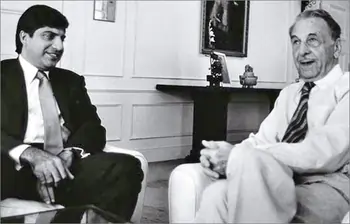
Once back in India, Mr. Ratan Tata had a job offer from the tech giant IBM. It was much to the chagrin of his uncle, Mr. JRD Tata, that he did not join the Tata Group upon his return to India. Speaking about how he later joined the Tata Group, Mr. Tata had said, “He [Mr. JRD Tata] called me one day and he said you can’t be here in India and working for IBM. I was in [the IBM office] and I remember he asked me for a resume, which I didn’t have. The office had electric typewriters so I sat one evening and typed out a resume on their typewriter and gave it to him”.
Thereafter, Mr. Ratan Tata joined Tata Industries in 1962, the promoter company of the Tata Group. He spent six months at Tata Engineering and Locomotive Company or Telco (now Tata Motors), before joining Tata Iron and Steel Company or Tisco (now Tata Steel) in 1963. In 1965, he was appointed technical officer in Tisco’s engineering division.
Everyone was concerned that I should not be treated differently, so I was told to stay in an apprentice hostel, and I worked on the shop floor for 6 months in Telco, and then for a couple of years in Tisco on the shop floor…I was in the blast furnaces, near the furnace in the steel melting shops. I knew every nook and cranny of the Tisco works.
Mr. Tata also went on to work briefly at Tata Consultancy Services in 1970, whereafter he was appointed Director-in-charge of National Radio and Electronics (Nelco). Subsequently, in 1974, Mr. Ratan Tata joined Tata Sons board as Director.
Closure of Empress Mill – A Personal Loss for Mr. Tata
In 1977, during his early career, Mr. Tata was given charge of then loss-making Empress Mill in Nagpur. Empress Mill had been established in 1877 by Tata founder and Mr. Ratan Tata’s great-grandfather, Mr. Jamsetji Tata. Mr. Ratan Tata, who was still quite young, took on the job to revive Empress Mill, which held tremendous importance for the Tatas.
Mr. Ratan Tata took several measures in order to help the ailing enterprise, including capital infusion and other strategic alterations. This became an endeavour close to Mr. Tata’s heart not only because of the historical importance of the mill, but also because of the fact that several families depended on it for employment and sustenance. However, despite his best efforts, the mill could not be salvaged. In 1986, Empress Mill had to be shut down, as Mr. Tata’s plans to revive it were rejected by the Tata leadership. A sum of about Rs. 50 lakh was required to save the mill, which was not sanctioned by the core management.
As per media articles, the closure of Empress Mill impacted Mr. Ratan Tata deeply, and this event motivated him to care about the well-being his employees.
Mr. Ratan Tata’s Career at Tata Group Apex Positions & Tata Strategic Plan
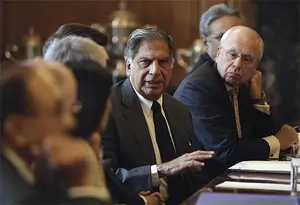
In 1981, Mr. Tata was appointed the Chairman of Tata Industries, succeeding Mr. JRD Tata, however, it would be a decade later in 1991 that he would succeed him as Tata Sons’ Chairman.
In 1983, Mr. Ratan Tata drafted the Tata strategic plan. In her book titled ‘Business Maharajas’, Ms. Gita Piramal quotes Mr. Tata: “You must remember there was an explosion of new emerging technologies in the West in the late ’70s: the super mini and personal computers, driven by microprocessor advances, artificial intelligence, the convergence of computing and communications into information technology and biotechnology…So I thought that the Tatas should be in these areas. We were among the few who would be willing and able to invest in these areas without expecting quick returns”.
There was an explosion of new emerging technologies in the West in the late ’70s…So I thought that the Tatas should be in these areas. We were among the few who would be willing and able to invest in these areas without expecting quick returns
This led to Tata Group focusing on areas such as telecommunications, oil exploration, computers, special alloys, and more. Mr. Tata explained to Ms. Piramal for her book, “My point was, why should Tatas not be first. As it happened, with the first round of liberalization under Rajiv Gandhi, these were precisely some of the areas that were encouraged”.
How Mr. JRD Tata Handed Over the Mantle to Mr. Ratan Tata
During a 1997 interview, Mr. Ratan Tata recounted how Mr. JRD Tata announced him as his successor in 1991. Mr. Tata shared, “…He [Mr. JRD Tata] had a heart problem and he was in Breach Candy Hospital. He was there a week and I’d see him every day. He was out on a Friday and the following Monday, I went to see him in the office”. He continued, “He would always start meeting by asking, ‘Well, what’s new?’ And I said, ‘J I’d been seeing you every day, there is nothing new since I saw you last”. To this, Mr. JRD Tata replied, “Well, I have something that is new that I want to tell you”, and he asked his nephew to take his position. After this incident, Mr. JRD Tata took this point to the management.
I followed someone who had very large shoes. He left me a great legacy, and I tried to follow that legacy
However, Mr. Tata’s Chairmanship of Tata Sons was challenged by those within the management, as he was considered unfit for the position. Some of the people who did not support this decision included Mr. Russi Mody from Tata Steel, Mr. Darbari Seth from Tata Chemicals & Tata Tea, Mr. Ajit Kerkar of Taj Hotels and Mr. Nani Palkhivala who was on the board of directors of many Tata companies. However, Mr. Ratan Tata was appointed the Chairman of Tata Sons, and he worked with Mr. JRD Tata as his mentor.
Mr. Ratan Tata’s Role in the Evolution of the Tata Group & Key Global Acquisitions
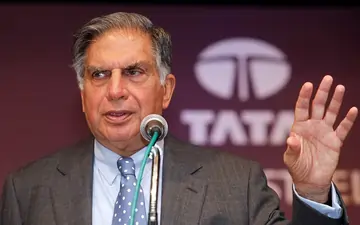
Mr. Ratan Tata’s contribution in the growth of Tata Group cannot be stressed enough.
Mr. Tata launched several new products, many of which are now household names. It was under his leadership that Tata Chemicals launched Tata Salt as India’s first vacuum evaporated iodised salt.
Tata Group acquired several global brands and made them Indian household names. This was done under Mr. Tata’s leadership who saw it necessary to give Tata Group a global identity.
Tetley Tea: Tata Group’s acquisition of global brands under Mr. Ratan Tata began in 2000 with UK’s Tetley Tea, which was acquired for USD 431.3 million. In the 1990s, Tetley Tea had grown extremely popular, and had become a prime competitor of Lipton. Through this acquisition, Tata Tea (now Tata Consumer Products) was in direct competition with international tea giants.
The strength of the Tata Group lies in its diversity and its ability to adapt to changing times
Truck Manufacturing Business of Daewoo: In 2002, Daewoo Commercial Vehicle Co. Ltd. was formed as a separate subsidiary of the South Korean Daewoo Motors. Two years later, in 2004, Tata Motors acquired it for USD 102 million. As of now, Tata Daewoo is a successful truck manufacturer headquartered in Gunsan, South Korea.
Corus Steel: In 2007, Tata Steel acquired Corus Steel, the second-largest producer of Steel in Europe at the time. The cost of this acquisition was about USD 13.1 billion. However, Corus Steel’s acquisition is not considered a successful move by Tata Steel. Other than adding a heavy debt on Tata Steel, Corus could also not perform well, because of China’s dumping of cheaper Steel into Europe.
Tata Steel’s former MD, Mr. JJ Irani, had admitted in 2017 that the Corus acquisition was an ‘aspirational mistake’. This acquisition, which put a lot of financial pressure on Tata Steel, has largely been dubbed as a failure.
Tata Indica: Launch of India’s first Indigenously Designed & Manufactured Car
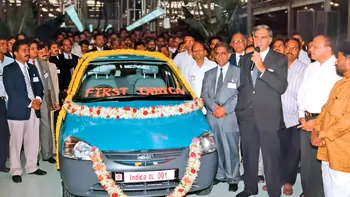
In 1998, Mr. Tata drove the first Tata Indica car off the assembly line. This was a project of great value to Mr. Ratan Tata, and about Rs. 1,700 crore was spent on developing Indica. Being the country’s first indigenously designed and manufactured car, Indica’s launch was therefore a major milestone for the Indian automobile sector.
After the car’s successful launch, many dissatisfied customers filed performance-related complaints against Tata Indica. Some of the issues that Indica customers faced included high noise and vibration levels inside the car, underperformance of the engine, and other basic problems such as improper functioning of the car windows.
I decided that India could produce its own car. Everybody, my friends overseas in the automobile business said that this couldn’t be done, we had to go through a collaboration to get know-how, to get technology…When the car came out I suddenly felt that I didn’t have a friend in the world and that all the warnings that people had given me were probably going to come true
This led to Tata Indica sales dwindling in 2000-01. Tata website mentions: “Tata Motors announced its largest ever loss of Rs 500 crore during that year, and a few experts promptly blamed this loss on the failure of Indica and the company’s decision to enter the passenger cars market”.
Even within the Tata Group, Mr. Ratan Tata received heavy criticism for problems with Tata Indica, and the often violent customer responses. Media did not refrain itself from criticising Tata Motors’ decision to enter passenger car segment with an indigenously designed and manufactured car. Tata’s website states: “…There is of course no dearth of condescending Western and Indian minds who never miss an opportunity to take potshots at India and other developing nations, which remain, in their minds, lands that are best suited to snake charmers, forests and elephants”.
Even in this desperate situation, Mr. Tata showed integrity and magnanimity of his character. He called an emergency meeting where the company’s management was given the chance to voice their criticism freely. They were quite critical about Indica, and they were definitely affected by the financial loss and the damage to the company’s reputation because of the situation. Once they had voiced their discontentment, Mr. Ratan Tata guided the meeting to a point where they could focus on what needed to be done for the resolution of the Indica situation.
Mr. Tata took immediate measures to address customer complaints, and retrofit camps were organised for Tata Indica, where about 45,000 cars were repaired. Tata Motors bore the cost for several of these repairs, and meetings with customers were held to obtain first-hand constructive criticism for Tata Indica’s performance.
Ups and downs in life are very important to keep us going because a straight line even in an ECG means we are not alive
Subsequently, in 2001, Tata Indica V2 was launched, which was an improved version of the car. Tata Indica V2 took off brilliantly, and sold 1 lakh models within the first 18 months of its launch, thereby becoming India’s fastest selling car.
While Tata Motors was already engaged in the production of heavy vehicles, Indica marked the company’s entry into the passenger car segment.
Acquisition of Jaguar Land Rover by Tata Motors
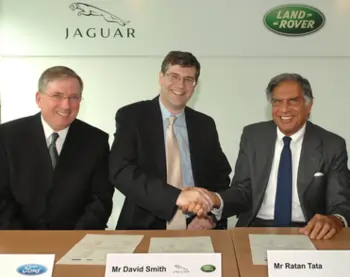
Problems with Tata Indica initial model set the precedent for one of the most famous stories from Mr. Ratan Tata’s life. After receiving a flood of complaints from Tata Indica customers, in 1999 Mr. Ratan Tata, dejected, went to Detroit, seeking to sell his car business to the American automobile giant, Ford. At the meeting, Ford’s officials questioned why Tata had ventured into making passenger cars when they did not have any experience for the same. Reportedly, Ford’s officials had said, “We are doing you a favour by buying your car division”. Met with such response, Mr. Tata decided not to sell his car business and improve the Indica.
Later, Indica V2 was launched in 2001, and became a hit amongst Indian car buyers. In 2008, Ford suffered during the Great Recession, and this led to Tata Motors’ acquisition of Ford’s Jaguar Land Rover (JLR) division for USD 2.3 billion in 2008. Expressing the significance of this deal, Mr. Bill Ford, the then Chairperson of Ford, said, “You [Tata Motors] are doing us a big favor by buying JLR”.
When Ford decided to sell [JLR]…my friends…distanced themselves from me saying, “What are you going to do with this?” Quite frankly, I didn’t know…So finally I stood up and said why don’t we shoulder to shoulder recreate the image that these two brands had and reignite the power of those two brands
Today JLR is still owned by Tata Motors, and it earned a revenue of GBP 29 billion (about 3.18 lakh crore) during FY-24.
Tata’s Acquisition of Air India: ‘Homecoming of the Maharaja’
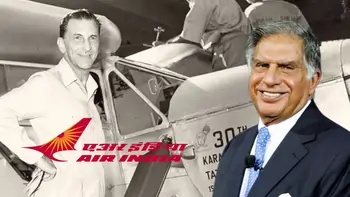
One of the interests that Mr. Ratan Tata shared with his predecessor and mentor, Mr. JRD Tata, was flying. It was this passion for aviation that led Mr. JRD Tata establish Tata Airlines in 1932 as a division of Tata Sons. Soon, Tata Airlines became a full fledged company in 1946, and it was renamed as Air India.
In 1953, Government of India became majority stakeholder in Air India, however Mr. JRD Tata continued serving as its Chairman till 1977.
Air India, during its time as a public enterprise, accumulated huge debt which amounted to Rs. 61,652 crore as on 31st August 2021.
In early 2022, Tata Group acquired Air India, an event often termed as ‘Homecoming of the Maharaja’, after the mascot of Air India.
In a statement dated 8th October 2021, Mr. Ratan Tata had said, “On an emotional note, Air India, under the leadership of Mr. J.R.D. Tata had, at one time, gained the reputation of being one of the most prestigious airlines in the world. Tatas will have the opportunity of regaining the image and reputation it enjoyed in earlier years. Mr. JRD Tata would have been overjoyed if he was in our midst today”.
Launch of Tata Nano: Mr. Tata’s Vision of India’s most Affordable Car
The Nano is not just a car; it represents a vision of mobility for the masses
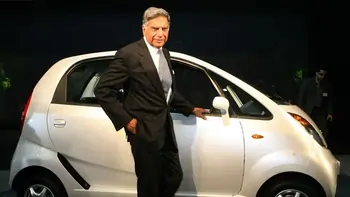
It was in 2008 that Tata Motors launched its iconic car, the Tata Nano. Tata Nano was born out of a vision to make India’s most affordable car. “What really motivated me, and sparked a desire to produce such a vehicle, was constantly seeing Indian families on scooters, maybe the child sandwiched between the mother and father, riding often on slippery roads”, Mr. Tata had shared in a May 2022 social media post.
Tata Nano’s manifestation was fraught with several difficulties all along the course of its design and production. The original plan to build production plant for the car in West Bengal were met with hurdles, post which Tata Motors established its plant in Sanand, Gujarat. Commodity prices, which included Steel prices, were proving a tough challenge to contain Tata Nano’s price within the targeted Rs. 1 lakh per unit. Several innovations in design and engineering had to be done in order to reduce the car’s cost. However, Mr. Tata’s vision endured, and the first Nano was launched on 10th January 2010.
Brief Account of Tata Group’s Philanthropic Activities Under Mr. Ratan Tata
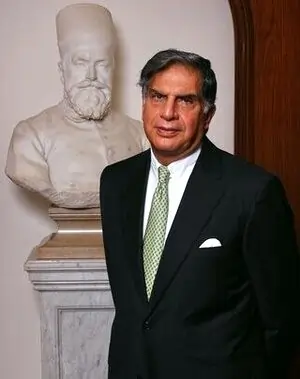
Mr. Tata was one of the foremost philanthropists in India. He is famed to have lived simply, while focusing on public welfare activities. Mr. Tata owned merely 0.83% of Tata Sons, whereas various philanthropic trusts owned 66% of the company. These trusts contribute towards areas of public healthcare, rural development, water & sanitation, education, and more.
One of the most unique aspects of Shri Ratan Tata Ji was his passion towards dreaming big and giving back. He was at the forefront of championing causes like education, healthcare, sanitation, and animal welfare, to name a few – Mr. Narendra Modi
Tata Trusts was founded by Mr. Jamsetji Tata in 1892, and since then it has donated a total of USD 102.4 billion up until 2021. In FY-23 alone, Tata Trusts disbursed Rs. 456.42 crore towards philanthropic causes.
Mr. Tata’s Contribution to Further Cancer Treatment and Research
Mr. Ratan Tata lost both his parents to cancer. It was in 1982 that his mother, Mrs. Soonoo Tata, was diagnosed with cancer. In 1989, he lost his father, Mr. Naval Tata, to cancer. Affected by these personal losses, Mr. Tata contributed towards the expansion of cancer treatment and research at the Tata Memorial Hospital, Mumbai. Notably, in 2010, Tata Trusts donated Rs. 220 crore to the Tata Medical Center in Kolkata for cancer research and treatment.
I was always moved by his strong sense of purpose and service to humanity. Together, we partnered on numerous initiatives to help people lead healthier, more prosperous lives – Mr. Bill Gates
Tata Trusts During CoVID Pandemic
During the CoVID-19 pandemic, Tata Sons and Tata Trusts pledged a total of Rs. 1,500 crore to cope with the crisis. Out of this Rs. 500 crore was towards healthcare infrastructure, Personal Protective Equipment (PPE) kits, and testing kits.
In this exceptionally difficult period, I believe that urgent emergency resources need to be deployed to cope with the needs of fighting the COVID-19 crisis, which is one of the toughest challenges that the human race will face
In 2020, Mr. Tata called the CoVID pandemic as ‘one of the toughest challenges that the human race will face’. During the pandemic, Taj Group of Hotels dispatched free meals for doctors, nurses, other healthcare providers and as well as patients in Mumbai’s government hospitals.
India’s First Not-for-Profit Hospital for Small Animals
On 1st July 2024, India’s first not-for-profit hospital for small animals, Small Animal Hospital, Mumbai (SAHM) was inaugurated by Mr. Tata. This 98,000 sq.ft. facility was develped with an investment of about Rs. 165 crore.
Mr. Noel Tata Succeeds Mr. Ratan Tata as Chairman of Tata Trusts
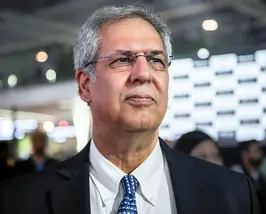
Mr. Noel Tata, half-brother of Mr. Ratan Tata, succeeded him as the Chairman of Tata Trusts. Mr. Noel Tata, born in 1957, to Mr. Naval Tata and Mrs. Simone Tata, holds an Irish citizenship.
Mr. Ratan Tata’s demise is an irreparable loss to not only the Indian business fraternity, but also to the Indian society. Having devoted his life towards nation building through his industrial and philanthropic endeavours, Mr. Tata’s legacy will be cherished not only by those who worked with him, but also by those across social strata whom he has benefitted, directly or indirectly.
Mr. Tata was a rare gem of not just the Indian but global business community. A true leader and inspiration for generations to come.