
From Coal to Nuclear: Can SMRs Repurpose India’s Aging Thermal Power Plants?
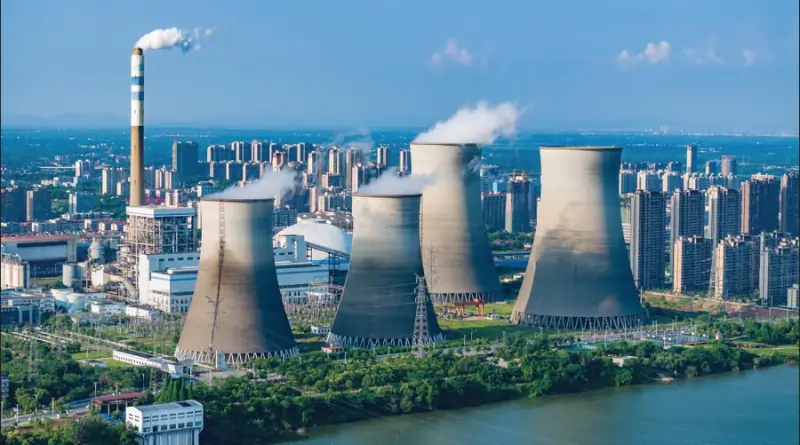
India’s power sector has been built on coal for decades. Thermal power plants still form the backbone of the country’s baseload electricity, but a significant portion of this fleet is aging, inefficient, and nearing retirement. At the same time, India’s clean energy transition faces a structural challenge; while renewables are expanding rapidly, they cannot yet provide round-the-clock baseload power at scale.
The convergence of retiring coal assets and the demand for reliable low-carbon baseload power is forcing policymakers to explore unconventional pathways. An idea that is quietly gaining traction is the repurposing of aging thermal power plants into nuclear facilities using Small Modular Reactors (SMRs). Commonly referred to as coal-to-nuclear repowering, this concept aims to turn existing infrastructure into a clean-energy asset rather than abandoning it altogether.
Coal-to-Nuclear Repowering Using SMRs
Coal-to-nuclear repowering involves replacing the coal-fired boiler of an existing thermal power plant with a nuclear heat source. This is where SMRs emerge as a potential enabler.
Small Modular Reactors are nuclear fission reactors with an electrical capacity typically below 300 MW per unit. Their compact size, modular construction, and lower upfront capital requirement position them as an alternative to large conventional nuclear plants. Unlike traditional reactors, SMRs are designed to integrate more easily with existing power plant layouts and grid infrastructure.
Instead of building entirely new nuclear plants from scratch, the SMR approach seeks to reuse existing land, transmission systems, and cooling infrastructure, offering the promise of lower costs and shorter development timelines compared to greenfield nuclear projects.
Feasibility: Infrastructure Compatibility, Standards and Global Learnings
Leveraging Existing Thermal Power Plant Infrastructure

Existing thermal power plant sites are considered suitable for SMR deployment primarily due to their established balance-of-plant systems and grid connectivity. Infrastructure such as turbine halls, cooling water intake and discharge systems, switchyards, transformers, and transmission lines can potentially be retained. This significantly reduces civil construction requirements and avoids one of the most time-consuming elements of new power projects, which is fresh grid interconnection approvals.
In SMR-based repowering, the coal- or gas-fired boiler is replaced by the reactor, while the downstream steam cycle (particularly turbines and auxiliaries) may be refurbished and reused if technical compatibility is achieved. When these conditions are met, brownfield deployment can be faster and less capital-intensive than greenfield nuclear construction.
Technical Criteria and Integration Challenges
Despite its promise, coal-to-nuclear repowering is not straightforward. Successful integration requires compliance with strict technical and regulatory standards. Electrical systems must be capable of handling the SMR’s output, cooling systems must meet the reactor’s thermal requirements, and site-specific safety criteria must be satisfied.
Global Experience: Progress and Lessons
Coal-to-nuclear repowering remains unproven at scale globally, but several countries are actively exploring the concept. In Romania, state-owned nuclear operator Nuclearelectrica S.A. is evaluating the deployment of NuScale SMRs at former thermal power plant sites, with Doicești identified as a potential location.
In the United States, NuScale Power Corporation attempted a coal-to-nuclear transition project in Utah. This project was ultimately cancelled due to sharp cost escalations, financing challenges, and scale-related economics. Rather than a setback, this has become an important learning point, highlighting the financial and execution risks associated with early SMR deployments.
The U.S. Department of Energy is now systematically identifying retiring coal plant sites suitable for SMRs, with developers such as TerraPower (Natrium reactor) and NuScale targeting locations where skilled workforce and infrastructure already exist.
Bharat SMR: India to Develop Indigenously Built SMRs
India is actively advancing indigenous SMR development as part of its broader nuclear expansion strategy. With a large fleet of coal plants expected to retire over the coming decades, coal-to-nuclear re-powering is being examined as a long-term option to preserve base-load capacity while reducing emissions.
BARC and the Design Framework of the Bharat SMR Program
The Bhabha Atomic Research Centre (BARC), operating under the Department of Atomic Energy (DAE), is responsible for nuclear reactor research and technology development in India. BARC is leading the design and engineering of the Bharat Small Modular Reactor (BSMR) program.
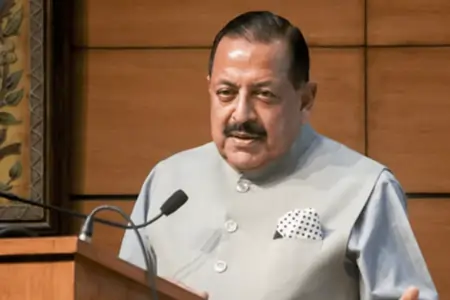
During a Parliament session, Minister of State in the Department of Atomic Energy of India, Dr. Jitendra Singh said that the Budget 2025–26 announcement for the Nuclear Energy Mission places emphasis on the development and deployment of five indigenous SMRs by 2033, with an outlay of Rs. 20,000 crore. These reactors are being designed as units capable of integration with existing thermal power plant infrastructure, supporting coal-to-nuclear repowering. Current efforts are focused on reactor design, safety systems, and technology validation rather than commercial deployment.
This policy support indicates intent, while highlighting the gap between development and deployment. Commercial rollout will depend on regulatory approvals, supply-chain readiness, and successful technology demonstration.
Under this Bharat Small Modular Reactor program, BARC is developing the 200 MW Bharat Small Modular Reactor (BSMR-200) and a 55 MW SMR, both based on Pressurised Water Reactor (PWR) technology.
NPCIL, NTPC and EIL to play Critical Roles in the BSMR Project
While BARC is responsible for reactor design and technology development, project execution and operational supervision are the responsibility of the Nuclear Power Corporation of India Limited (NPCIL).
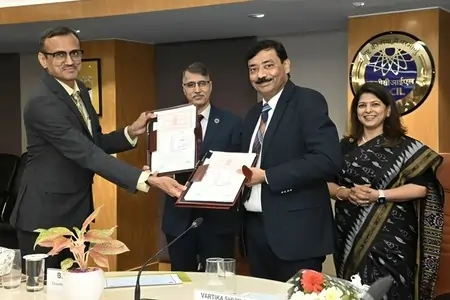
Separately, in August 2025, Engineers India Limited (EIL) signed a Memorandum of Understanding with NPCIL for providing engineering services towards development of systems and components of Bharat Small Modular Reactor.
NTPC being the single largest operator and owner of Thermal power plants in India will have a special role for successful implementation of Coal-to-Nuclear and deployment of BSMRs at various sites. Owing to this, in April 2025 NTPC invited bids for consultants to conduct feasibility studies for SMR deployment, marking India’s first formal, nationwide assessment of coal-to-nuclear re-powering potential.
India’s Private Sector Companies eager to Participate in the BSMR, BSR Programs
In addition to the Central roles of BARC, NPCIL, NTPC and EIL in the BSMR Program, India’s private sector has also shown considerable interest to participate in the program.
Six major private sector companies, Reliance Industries, Tata Power, Adani Power, Hindalco Industries, JSW Energy, and Jindal Steel & Power, have formally expressed interest in setting up Small Modular Reactor (SMR) projects under the Bharat Small Modular Reactors program.
In October 2025, Nuclear Power Corporation of India had invited bids from private players for setting up two 220 MW BSRs (Bharat Small Reactor) based on existing Pressurised Heavy Water Reactor technology [this is different from the new BSMR Program]. The last date to submit bids for this tender is 31st March 2026.
While private players will provide land, capital and cooling water, NPCIL will design, provide quality assurance, operate and maintain such power plants.
India’s Aggressive Nuclear energy Transition Plan
India currently operates over 8.7 GW of nuclear capacity across 24 reactors, contributing around 3% of total electricity generation. The government targets 22.38 GW by 2032 and 100 GW by 2047 under its Nuclear Energy Mission.
SMRs: Crucial to the Thermal-to-Coal Transformation, but Still Unproven at Scale
Coal-to-nuclear repowering using SMRs represents a compelling idea but not a proven solution. While policy intent is strong and technological development is underway, execution risks remain significant. Infrastructure compatibility, regulatory timelines, financing models, and costs will determine whether this concept transitions from pilot studies to scalable reality.
If these challenges are addressed, repurposing aging thermal power plants could become a pragmatic pathway for India to retain baseload strength while advancing its clean energy goals without overstating certainty in an inherently complex transition.
