After Ultratech, Adani to Enter Indian Cable & Wire Industry, Competition to Intensify

Adani Group has recently announced plans to enter the Indian cable and wire market, which has sparked discussions about intensifying competition within the industry.
The group’s debut in the sector will be made through Praneetha Ecocables Ltd. (PEL) a 50-50 joint venture (JV) between Adani’s Kutch Copper Ltd. and Praneetha Ventures Pvt. Ltd. Adani Enterprises Ltd. (AEL) conveyed this information via a stock filing dated 19th March 2025, however no details about the scale of Adani’s investment or PEL’s planned product offerings were shared.
It was observed that post Adani’s announcement, stocks of major Indian cable and wire companies suffered significant hit, suggesting uncertainty among shareholders about the future trends in the Indian cable and wire industry.
Trends in Indian Cable and Wire Industry
Historically, the average shareholder has shown strong confidence in the Indian cable and wire industry. This perception has been built on several factors, which includes leading cable companies exhibiting high asset turns, good Return on Capital Employed (ROCE), and market analysts’ projections of robust growth in India’s cable and wire demand for the coming years.
Typical Sales Generation Potential 5-7x of Gross Block
Gross block of a company refers to the total value of a company’s tangible assets without taking into account any depreciation. Considering the usual trend exhibited by India’s major cable manufacturers, it can be deduced that a company could be capable of generating about 5-7 times of its gross block as its annual turnover. Therefore, Indian cable manufacturers exhibit high asset turns.
In recent times Indian Cable & Wire Industry Offers High ROCE, Profitability
A quick glance at the trends reveals that the Indian cable and wire industry offers a high Return on Capital Employed (ROCE). In other words, companies in the Indian cable and wire industry usually report high return on the capital that they have put to use. Polycab, the market leader in cables and wires, has a ROCE of about 31.3%. KEI has a ROCE of 27.2%, whereas RR Kabel and Finolex Cables have ROCE as 21.7% and 18.7% respectively.
In terms of compounded profit growth over 3 years, Polycab’s number stands at 25%, KEI is at 29%, RR Kabel is at 31%, 32% for Cords Cable and 26% for Finolex Cables. This suggests that India’s cable and wire industry offers promising margins.
Why Are More Players Entering Indian Cable & Wire Industry?
As already stated, the high asset turn in the Indian cable and wire industry makes it a lucrative ground for new players to enter.
UltraTech Cement’s management, during a conference call on 28th February 2025, said that they expect an asset turn of 5x from its upcoming cables and wires plant, which would essentially mean an addition of about Rs. 9,000 crore (from its Rs. 1,800 crore investment) to the company’s top-line annually.
In fact, as per UltraTech Cement’s management, the company expects a ROCE of 20-25% from its investment in its upcoming Bharuch cables and wires plant.
Projected Growth of Indian Cable & Wire Market Higher than India’s GDP Growth
As per a March 2025 report by Fortune Business Insights, currently the size of India’s cable and wire market is estimated to be USD 10.01 billion (approximately Rs. 85,888 crore). It is projected that this figure is expected to grow to USD 17.08 billion (approximately Rs. 1,46,550 crore) by 2032, at a CAGR of about 7.94%. Separately, Mordor Intelligence, another market research firm, estimates the Indian cable and wire market to grow at a CAGR of 9.14% between FY-25 and FY-30, estimating the cable & wire market in India to be approx. 2,81,570 Cr. by 2030. These numbers suggest an optimistic growth of the Indian cable and wire market, which is higher than country’s current GDP growth rate (Real GDP growth of 6.4% in FY-25).
With Adani and Ultratech’s Entry Competition Likely to Intensify
Adani Group’s decision to enter India’s cable and wire industry comes weeks after UltraTech Cement announced similar plans. It is being speculated that JSW Group might also make an announcement soon to enter the Indian cable and wire manufacturing scene. This assumption can be based on the fact that in January 2025, JSW Group announced its foray into Copper. It must be noted that both UltraTech and Adani Group have the advantage of having easy access to Copper, namely from Hindalco and Kutch Copper respectively with could give both these players a pricing advantage with regards to Copper sourcing. This could lead to a stiff price-based competition in the Indian cable and wire industry.
New Entrants Likely to Trigger Demand-Supply Conundrum in Near-Future

Market experts are expecting tough competition amongst Indian cable and wire manufacturers in near future. As mentioned already, typically cable companies exhibit an asset turn of 5-7x. This means that for every Rs. 1 crore of CapEx, cable companies could add Rs. 5 crore to 7 crore of sales turnover. Now considering CapEx announcements by the top listed players in the Indian cable and wire industry such as Polycab India, KEI Industries, RR Kabel, Havells India, and Finolex Cables, we can roughly estimate the sales capacity which these companies can add in the near future.
Polycab has about Rs. 6,000 crore to 8,000 crore of CapEx planned over the next 5 years, whereas KEI’s planned CapEx is around Rs. 1,700 crore to Rs. 1,800 crore over the next 2 years. Havells India’s CapEx is generally around Rs 300 crore per year, and as per Finolex Cables’ management, the company’s CapEx will likely be Rs. 100 crore to Rs. 200 crore in FY-26. RR Kabel’s CapEx will be around Rs. 1,200 crore over the next 3 years.
Considering the high asset turn in the Indian cable and wire industry, and the volume of CapEx, it can be estimated that in total, a sales capacity of Rs. 25,000 crore to Rs. 26,000 crore can be added every year by major listed players.
Thus, in the next 5-year period, this translates loosely to about Rs. 1.25 to 1.35 lakh crore of sales capacity addition by major cable companies by FY-30. The present capacity of major players in the Indian Cable & Wire Industry stands at approx. INR 66,000 to 67,000 Cr (considering Polycab, Finolex Cables, KEI, RR Kabel, Cords Cable, Delton Cables, Paramount Communications, Havells and some more).
So the total capacity of just the major cable companies in India could stand at approx. 2,00,000 Cr. by 2030. This figure is already very close to the total projected demand in the Indian cable and wire market by 2030 mentioned earlier. Add to this the new entrants, Adani and Ultratech and several small and medium-sized companies regularly entering this industry. This clearly points to the likelihood to very stiff price competition over the next 5 years which could hit the profit margins of Indian Cable & Wire Industry.
More Competition in Wires, Multi-Core Flexible Cables Market
Several approvals are needed for different types of cables, which can take anywhere between 6-24 months to secure. However, wires, which have simpler construction as compared to cables, do not require such rigorous customer approvals, as much certifications or the availability of a “past track record” which most large customers require.
For this reason, UltraTech Cement is expected to generate 60% of its revenue from wires and the remaining 40% from cables. It is estimated that PEL (Adani Group) will also start with wire products and multi-core cables forming bulk of the revenue from its to-be-established facility, and later diversify into the production of more complex cables as and when it secures requisite approvals.
This means that wire and multi-core flexible cable segment will be the first to face tougher competition in the market.
Higher Competition Likely to Affect Existing Cable & Wire Players more
While speaking about UltraTech Cement and Adani’s entry in the Indian cable and wire industry, one must keep in mind that these companies are giants as compared to even the largest cable & wire companies in India. UltraTech Cement’s revenue for FY-24 was almost Rs. 71,000 crore, whereas the Adani Group’s flagship company, Adani Enterprises’ FY-24 revenue was close to Rs. 1 lakh crore. Considering this, UltraTech’s investment to venture into cable and wire manufacturing is a paltry sum for the company. Adani Group’s to-be-announced investment will also, in all probability, be a small sum compared to the scale of its other investments. Therefore, the stakes are lower for the new entrants even if their wire and cable endeavours turn out to be unviable. However, companies which have their roots in the cable & wire industry will be affected far more due to the increased competition.
After Adani’s Announcement KEI Shares Tumble 13%, Polycab Stock Down 7%

Following AEL’s filing, shares of Indian cable and wire majors such as KEI Industries, Polycab India, Havells India and Finolex Cables suffered share market losses.
KEI’s stock suffered the most, nosediving by 13.47%. The company’s share price slid to Rs. 2,841.10 apiece a day after AEL’s filing from Rs. 3,283.25 apiece on 19th March 2025.
Polycab India, the country’s largest cable and wire company, saw its share price take a 6.53% hit.
Apart from KEI and Polycab, stocks of Finolex Cables and Havells India exhibited respective drops of 4.51% and 3.63% a day after AEL’s aforementioned stock filing.
PE Ratios of Major Cable Companies have Dropped Significantly
Since the announcement of Ultratech Cement’s entry into the cable and wire industry and further after Adani Group’s announcement the largest Indian cable and wire stocks, KEI Industries, Polycab India and RR Kabel have shown steep downgrading in terms of their PE ratios.
While KEI Industries’ PE ratio has dropped from 54.4 on 25th February to the current 41.3, Polycab India’s PE ratio dropped from 47.26 on 25th February to 41.1 currently, RR Kabel saw it’s PE ratio drop from 48.3 to the current 39.8 over the same period.
Adani’s Foray into Cables & Wires Manufacturing Strategic for Backward & Forward Integration
Adani Group’s entry into the cables and wires industry is a strategic move by the conglomerate in terms of backward as well as forward integration.
Backward Integration with Kutch Copper
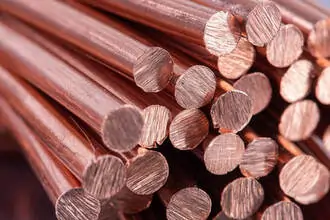
Kutch Copper’s plant at Mundra, Gujarat, currently has a capacity to produce 0.5 Million Metric Tonne Per Annum (MMTPA) of Copper rods, which will be scaled up to 1 MMTPA by FY-29. As Copper is a major raw material for the production of cables and wires, Kutch Copper’s Mundra plant is expected to smoothen Praneetha Ecocables Ltd’s raw material procurement affordably. Therefore, PEL’s cable and wire manufacturing could benefit from backward integration with Kutch Copper.
Adani’s RE Portfolio to Strengthen Forward Integration
Apart from this, the Adani Group is a major Renewable Energy project developer, which can provide ample market opportunities for PEL-produced cables. It must be noted that Renewable Energy is one of the major drivers for the growth of the country’s cable and wire industry. This not only includes cabling used in RE generation plants, but also cables required to evacuate the generated power and to integrate it with the national grid.
In fact, Adani Green Energy Ltd. (AGEL) is developing the world’s largest RE park in Khavda Gujarat, which has a planned generation capacity of 30 GW by 2029. As of now, AGEL has a total operational RE generation capacity of 12.84 GW spread over solar, wind and hybrid power plants. By 2030, AGEL plans to have an installed RE capacity of 50 GW.
In summary, with the above scenarios and numbers there is no doubt that new entrants like UltraTech Cement, Adani and others will heat up the competition in the lucrative Indian Cables and Wires Industry. This could lead to a rethink on the scale of future investments considering likely changes in the demand-supply equation going forward.