
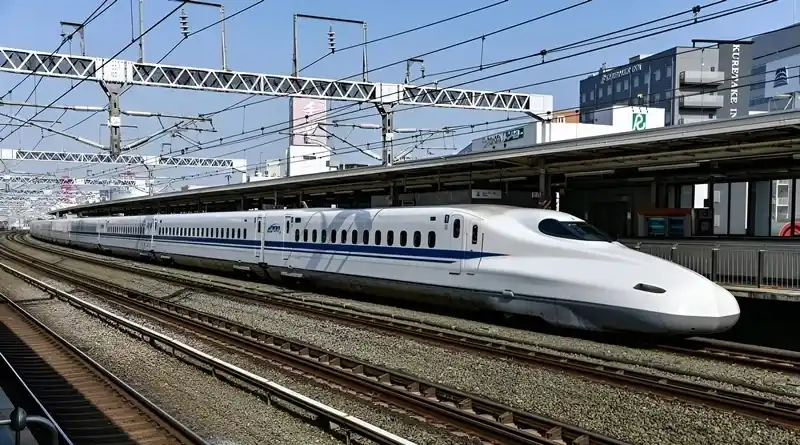
Indian Budget Allocates Rs. 2.93 Lakh Cr. CapEx for Indian Railways
Railway development across the country has received a significant allocation under the Indian Union Budget 2026–27. A capital expenditure of Rs. 2,93,030 crore has been planned for Indian Railways in the latest budget announcement.
According to a release issued by the Press Information Bureau (PIB), this marks the highest-ever capital expenditure as well as the highest allocation made for Indian Railways.
Seven High-Speed Rail Corridors Announced as Growth Connectors

As part of its infrastructure expansion plans, the Indian Government has announced seven new high-speed railway corridors between key cities. These corridors have been described as ‘growth connectors’ aimed at promoting environmentally sustainable passenger transport systems and improving inter-city connectivity.
The corridors include Mumbai–Pune, Pune–Hyderabad, Hyderabad–Bengaluru, Hyderabad–Chennai, Chennai–Bengaluru, Delhi–Varanasi, and Varanasi–Siliguri. These routes are expected to reduce travel time between major cities and improve passenger movement across regions. These corridors will cover a total length of nearly 4,000 Km and will be developed with a total cost of Rs. 16 lakh crore.
High-Speed Rail Corridors: Projected Travel Time and Regional Impact
Referring to the expected travel durations on these routes, Mr. Ashwini Vaishnaw, Minister for Railways, Government of India, mentioned that travel time between Chennai and Bengaluru is expected to be approximately 1 hour and 13 minutes, while Bengaluru to Hyderabad may take around 2 hours. The Chennai–Hyderabad route is projected to take about 2 hours and 55 minutes.
The network is expected to support economic activity in Karnataka, Telangana, Andhra Pradesh, Tamil Nadu, Kerala, and Puducherry by improving connectivity and reducing transit time between major urban centres.
In western and central India, the Mumbai–Pune high-speed corridor is expected to reduce travel time to approximately 48 minutes, strengthening connectivity between the two cities. In addition, the Pune–Hyderabad corridor is projected to enable travel in around 1 hour and 55 minutes.
In northern and eastern India, the Delhi–Varanasi high-speed corridor is expected to allow travel in approximately 3 hours and 50 minutes. Further, the rail corridor from Varanasi via Patna to Siliguri in West Bengal is projected to enable travel between Varanasi and Siliguri in about 2 hours and 55 minutes. This enhanced connectivity is expected to improve transportation links across Delhi, Uttar Pradesh, Bihar, and West Bengal, potentially contributing to economic activity along this route.
Union Budget 2026–27 Focuses on Sectors Beyond Railways
The Union Budget for FY 2026–27 was presented by the Union Finance Minister, Nirmala Sitharaman, on 1 February 2026. In addition to budgetary allocation for Indian Railways, the Union Budget for FY 2026–27 has placed emphasis on key sectors such as semiconductors and rare earths, defence, and biopharmaceuticals. The Budget outlines a forward-looking roadmap aimed at strengthening domestic capabilities, reducing import dependence, and enhancing India’s position in global value chains.
