Union Budget 2026–27: Capex Push, Strategic Manufacturing, Infrastructure Take Centre Stage
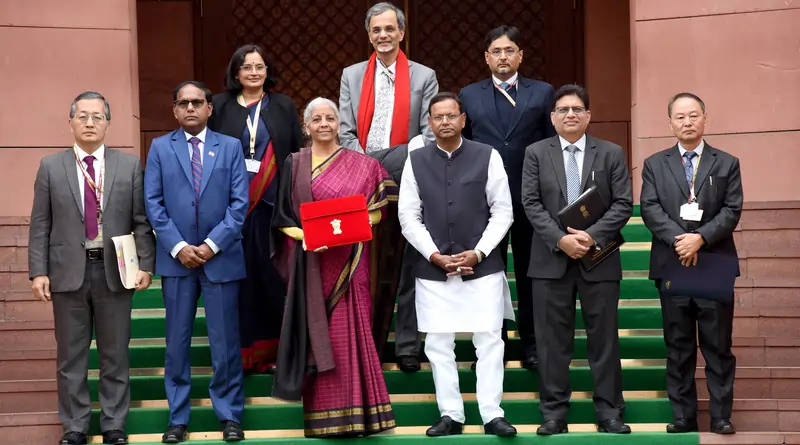
The Union Budget for FY 2026–27 was presented by the Union Finance Minister, Nirmala Sitharaman, on 1 February 2026. The Budget places a clear emphasis on capital expenditure, strategic manufacturing, and long-term supply chain resilience, reinforcing the Government’s intent to strengthen India’s industrial and infrastructure backbone.
From semiconductors and rare earths to railways, defence, and biopharmaceuticals, Budget 2026–27 lays out a forward-looking roadmap aimed at building domestic capabilities, reducing import dependence, and enhancing India’s position in global value chains.
Budget Anchored on Three Kartavyas
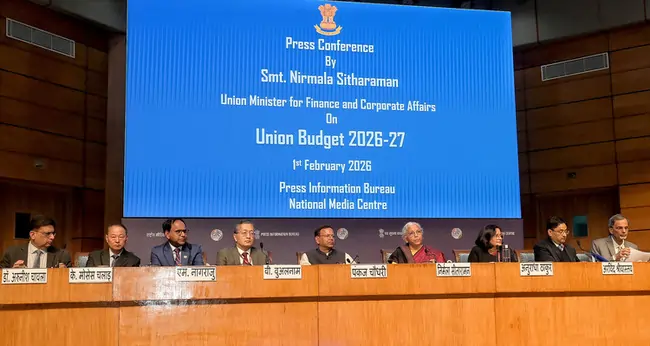
In her Budget speech, the Indian Finance Minister noted that this was the first Budget prepared in Kartavya Bhawan and is inspired by three guiding Kartavya.
The first kartavya seeks to accelerate and sustain economic growth by improving productivity and competitiveness, while building resilience against global volatility. The second focuses on fulfilling people’s aspirations and strengthening their capacities so that they can actively participate in India’s development journey. The third, aligned with the vision of Sabka Saath, Sabka Vikas, aims to ensure that every family, region and sector has equitable access to opportunities and resources.
High-Speed Rail Corridors and Record Allocation for Railways
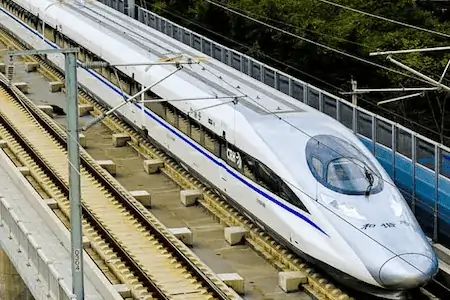
Infrastructure development received a boost with the announcement of seven new high-speed rail corridors. These corridors will link Mumbai–Pune, Pune–Hyderabad, Hyderabad–Bengaluru, Hyderabad–Chennai, Chennai–Bengaluru, Delhi–Varanasi, and Varanasi–Siliguri.
For Indian Railways, the Budget has proposed a record capital expenditure of Rs. 2,93,030 crore, marking the highest-ever capex as well as allocation for Indian Railways. The funding is expected to accelerate network expansion, modernisation, safety upgrades, and rolling stock manufacturing.
The corridors are expected to reduce inter-city travel time and facilitate seamless, multimodal movement of passengers.
Apart from these new corridors, Indian Railways also announced to develop three new Dedicated Freight Corridors (DFCs), with a length of over 4,300 Km and development cost of Rs. 2 lakh crore.
Rare Earth Corridors: Strengthening Self-Reliance in Critical Minerals

In a move to secure access to raw materials, the Budget announced the development of Rare Earth Corridors across Odisha, Kerala, Andhra Pradesh, and Tamil Nadu. These corridors will support mining, processing, research, and manufacturing activities related to rare earth elements, with a special focus on Rare Earth Permanent Magnets (REPMs).
REPMs are used for electric mobility, renewable energy, electronics, aerospace and defence applications. The Government has earmarked an outlay of Rs. 7,280 crore for the corridors, including the creation of 6,000 Metric Tonnes Per Annum (MTPA) of REPM manufacturing capacity.
Out of the total allocation, Rs. 6,450 crore will be provided as sales-linked incentives over five years, following a two-year gestation period. Additionally, Rs. 750 crore will be provided as capital subsidy for advanced processing and manufacturing infrastructure.
On the global front, India continues to secure diversified supply chains. As per a PIB release dated 3rd February 2026, the Ministry of Mines has entered into agreements with mineral-rich nations, including Australia, Argentina, Zambia, Mozambique, Peru, Zimbabwe, Malawi, and Côte d’Ivoire, for long-term access to critical minerals.
Khanij Bidesh India Limited (KABIL), a joint venture of NALCO, Hindustan Copper, and MECL, signed an agreement with Argentina-based CAMYEN for exploration and mining of five lithium brine blocks.
Public Capital Expenditure Raised to Rs. 12.2 Lakh Crore
The Government has proposed a public capital expenditure of Rs. 12.2 lakh crore for FY 2026–27, up from Rs. 11.2 lakh crore in the previous fiscal year.
Public capex has risen sharply over the past decade, increasing from around Rs. 2 lakh crore in FY 2014–15 to current levels. This rise reflects the Government’s long-term focus on asset creation and infrastructure development. The allocation is expected to generate strong multiplier effects across sectors such as power, roads, railways, manufacturing, and construction.
Defence Outlay Crosses Rs. 7.85 Lakh Crore in Budget 2026-27
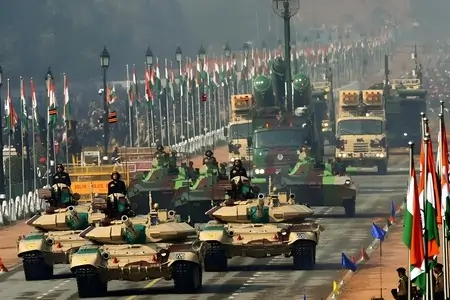
Defence remains a strategic priority, with a total allocation of Rs. 7.85 lakh crore in Budget 2026–27. Of this, over Rs. 2.19 lakh crore has been earmarked for capital expenditure of the Armed Forces. The allocation marks a 15.19% increase over the FY 2025-26 budget estimates and accounts for 14.67% of total Central Government expenditure.
A major highlight is the allocation of Rs. 1.39 lakh crore for procurement from domestic defence industries’. The allocation to DRDO has been increased to Rs. 29,100.25 crore to support indigenous research and development in defence technologies.
Also, there have been several recent developments in India’s defence sector. These include a Memorandum of Understanding (MoU) between Adani Defence and Embraer, a Brazil-based aerospace company, to develop a regional transport aircraft ecosystem in India. Additionally, HFCL Ltd. has been allotted 1,000 acres of land in Andhra Pradesh’s Sri Sathya Sai district for a greenfield defence manufacturing facility.
India Semiconductor Mission 2.0: Building a Full-Stack Ecosystem
Another key announcement in Union Budget 2026–27 is the launch of India Semiconductor Mission (ISM) 2.0. The next phase of the mission will focus on producing semiconductor equipment and materials, developing capabilities and strengthening domestic as well as global supply chains.

To support ISM 2.0, the Finance Minister announced a budgetary provision of Rs. 1,000 crore for FY 2026–27.
Commenting on this launch, Mr. Sujay Shetty, Managing Director (ESDM & semiconductor) at PwC India, said“The launch of ISM 2.0 represents a transformative step forward, prioritising domestic production of equipment… resilient supply chain fortification, intensified industry-led R&D, and a robust skilled workforce through dedicated training initiatives”.
The domestic semiconductor market is witnessing rapid growth. As per industry estimates, the size of the Indian semiconductor market was about USD 38 Billion in 2023, USD 45 to USD 50 Billion in 2024-2025 and is expected to reach USD 100 to USD 110 Bn by 2030.
It in interesting to note that the groundbreaking ceremony of Uttar Pradesh’s first semiconductor manufacturing unit is expected to be held in January 2026.
Biopharma SHAKTI: Boost to Life Sciences and Healthcare Innovation

The Union Budget also announced Biopharma SHAKTI, aimed at strengthening India’s biopharmaceutical and life sciences ecosystem. The program proposes an investment of Rs. 10,000 crore over the next five years, focusing on research and innovation in biologics, vaccines, and advanced therapeutics.
This is expected to enhance India’s global competitiveness in biopharma, while supporting domestic healthcare needs and export growth.
Mr. Anish Shah, Group CEO & MD, Mahindra Group, said,“The emphasis on frontier and strategic manufacturing sectors, including the launch of enhanced schemes such as Biopharma Shakti…..reflects a clear commitment to building global-scale manufacturing capabilities”.
Government Announces Regional Medical Hubs and Sustainable Tourism Push
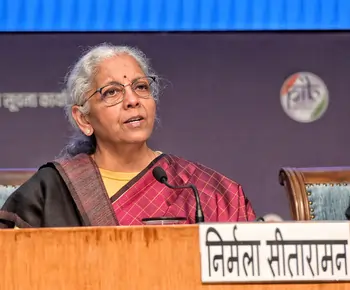
Presenting the Union Budget 2026–27 in Parliament, Finance Minister Nirmala Sitharaman announced to position India as a global hub for medical tourism. She said, “To promote India as a hub for medical tourism services, I propose to launch a scheme to support States in establishing five Regional Medical Hubs, in partnership with the private sector”.
These proposed hubs will function as integrated healthcare complexes, bringing together medical services, education, and research under one ecosystem. This will strengthen India’s healthcare infrastructure and enhance its appeal to international patients seeking quality and cost-effective treatment.
Dr Mukesh Batra, Founder-Chairman Emeritus of Dr Batra’s Healthcare, said “It [Budget] signals a clear policy shift towards strengthening preventive and integrated healthcare”.
Highlighting the broader economic impact, the Finance Minister underlined the tourism sector’s potential in generating employment and boosting foreign exchange earnings. She outlined plans to develop mountain trails in Himachal Pradesh, Uttarakhand, and Jammu & Kashmir, as well as in Araku Valley and Podhigai Malai.
Through these initiatives, the government aims to combine healthcare excellence and sustainable tourism to drive growth and global engagement.
MSME Focus: Rs. 10,000 Crore Growth Fund Announced
The Budget announced a fresh allocation of Rs. 10,000 crore to the Small and Medium Enterprises (SME) growth fund. The allocation is expected to provide fresh impetus to MSMEs impacted by credit stress and outdated technologies, enabling them to scale operations, modernise processes and improve competitiveness.
Commenting on the Budget allocated to MSMEs, Mrs Anjali Singh, Chairperson, CII Northern Region and Executive Chairperson, said, “The Union Budget 2026 presents well-targeted interventions for the MSME sector. Improved access to growth capital and measures supporting sustainable scaling will significantly strengthen MSMEs”.
Textile Sector: Five-Part Integrated Program Announced
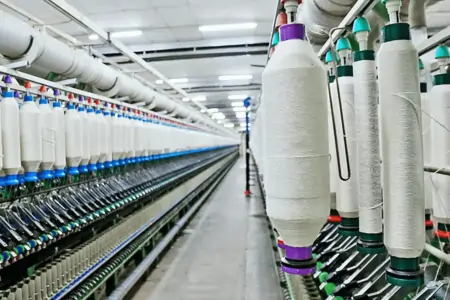
The Government has proposed an Integrated Program for the Textile Sector comprising five key components mentioned below.
The first component is the National Fibre Scheme, which targets to achieve self-reliance across the fibre spectrum by supporting natural fibres such as silk, wool and jute. The scheme will strengthen domestic fibre availability and reduce import dependence.
The second component, Textile Expansion and Employment Scheme, will focus on modernising traditional textile clusters through capital support for machinery, technology upgradation, and establishment of testing centres.
National Handloom and Handicraft Program, third component, handlooms and handicrafts will be integrated under a framework to provide support to weavers for improving incomes and preserving India’s textile heritage.
Another component, Tex-Eco Initiative, seeks to promote globally competitive and environmentally sustainable textile and apparel manufacturing.
Finally, Samarth 2.0 aims to modernise the textile skill ecosystem through deeper collaboration with industry and academic institutions, ensuring the availability of skilled manpower across the value chain.
Budget 2026–27 Draws Industry Support for Growth and New Energy Initiatives
Several industry leaders have shared their perspectives on the Union Budget 2026–27, highlighting its focus on stability, long-term growth, and strategic support for manufacturing and new energy sectors amid global economic uncertainty.
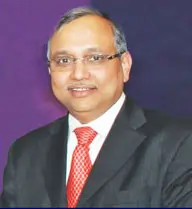
Mr. Chandrajit Banerjee, Director General of the Confederation of Indian Industry, said, “At a time of heightened global uncertainty, the Budget sends a reassuring signal of continuity, credibility, confidence, and long-term vision”.
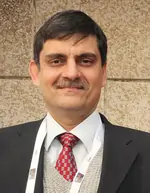
Mr. Vikram Gandotra, President, IEEMA, said, “The budget offers a strategic push for comprehensive economic reforms that set the stage for sustainable growth by driving employment, productivity, and competitiveness. IEEMA welcomes the emphasis on manufacturing and the strategic securing of self-reliance in critical minerals, including the proposal to provide basic customs duty exemption on the import of capital goods required for processing critical minerals in India”.

Mr. Hartek Singh, Vice President, IEEMA, said, “We welcome the government’s support for new energy – the basic customs duty (BCD) exemption on capital goods used for manufacturing Lithium-Ion Cells for Battery Energy Storage Systems, which will strengthen India’s energy storage ecosystem”.